Facade-Wide
CONTRACT


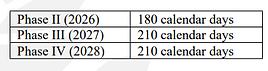
According to the contract, the Owner must be able to present evidence to the Contractor that we can uphold our financial obligations, so this may be driving the aggressive funds collection timeline. This in turn brings the question as to why the previous Board would obligate our community to such a large contract without already having stable finances in place to support it.

As the Architect, Reliable Engineering is tasked with administration - a potential duplication of the 2% allegedly being paid to NRP for similar services. Essentially, $40k is being set aside to fund work already being done by our engineering firm.

The scope of the contact can be readily modified through mutual agreement by the Contractor, Owner, and Architect - a fact which the previous Board, Property Management Company, and Architect would not confirm during the Special Meeting of October 2, 2025. There are many reasons a contract may need to be modified short of cancellation, and this reflects a healthy contractual relationship. The previous Board's inability to confirm the presence of this provision in the contract reflects either a lack of knowledge of the document as a whole, or a failure to ensure the transparency of the contract process.

Standard construction practice is for incremental payment to occur as work progresses. This contract clearly indicates that payments will be for 'completed, in-place work only' as verified by the Engineer (or Customer), raising questions about requiring 50% payment by February 2026.

We would like to stress that it is NOT our intention to cancel the contract (we want our building/homes safe!). However, the former Board's failure to identify the cancellation clause reflects either a fundamental misunderstanding of the contract or an unwillingness to address community concerns.


In order to make their bids more competitive,
contractors can list several 'alternatives' as credits towards their overall bid to gain a competitive edge over other submissions. The highlighted work items 3 & 4 from this table in C. A. Lindman's bid were clearly taken advantage of - however, they are not reflected in our special assessment.
Additionally, C.A. Lindman guaranteed to maintain 2026 pricing through 2027. This impressive commitment should reduce the need for a high contingency.
Special Assessment Resolution 2025 - 02


As recently as March 17, 2025 it had been communicated to the Community that Tiers 9 &11, the emergency/urgent work on the facade, had been fully funded and budgeted. Only when the initial Special Assessment Resolution was levied on June 10, 2025, did it appear that the Community was being re-obligated to fund these repairs.
Inconsistently, in response to a list of questions sent to the Board on July 29, 2025 the Community was once again informed that elevators would be funded fully through 'regular assessments' - our HOA fees. However, in the latest iteration of the Special Assessment Resolution, the term 'elevator modernization' is used, alluding to the fact that the Special Assessment funding is necessary to refill our elevator funds to fully update our elevators once and for all.


Management Report for the Board of Directors Special Meeting, October 2, 2025
In total, the Special Assessment Resolution includes $862,015 for historical costs that the Community was told were fully budgeted. The former Board used this to justify a 15% HOA increase this past April (2025). We continue to receive inconsistent communications about what the historical funding is being levied for. Although we can all agree the elevators must be replaced, attempting to procure funding for this under the special assessment for facade work is questionable.


Considering the Board pre-purchased $58k bricks in September, a credit of $55k should be reflected in our overall contract with C.A. Lindman.

Contingencies and Engineering Fees

Material cost escalation contingency (inflation allowance) is normally the responsibility of the Contractor, not the Owner
This appears to be a duplication of responsibilities our Engineer/Architect provides.
A significant portion of the special assessment has been set aside for 'contingency & engineering', with very little detail into each line item. In the world of construction, depending on the actual risks involved, responsibility of the contingency falls on the project owner, the construction contractor themselves, or the engineer/design firm. Justification for why the contingency is fully being financed by HCC has never been fully explained.
A construction contingency is a budget reserve set aside to cover unforeseen costs or delays during a project. It acts as a financial safety net for unexpected issues and is typically 5–10% of the total project budget. It is a proactive risk management tool to ensure the project stays on track financially and can be completed. Unused contingencies are normally returned to the owner.
The overall risk of unforeseen issues and owner design changes have been mitigated through out past work on tiers 9/11/15 and equipment availability is a minimal risk (and covered by the 6% inflation allowance) through the prebuying bricks, guarantee from the contractor that they will maintain material costs through 2027, and how the contract was written overall.

This page is a living document and will continue to be updated/modified based on new information, documentation availability, feedback from the community, etc.
The information contained here captures both factual screenshots from the contract, as well as opinion from individuals with expertise in the construction/contract field. The intention of this page is to both inform, as well as motivate the community to seek out knowledge while following this process.